


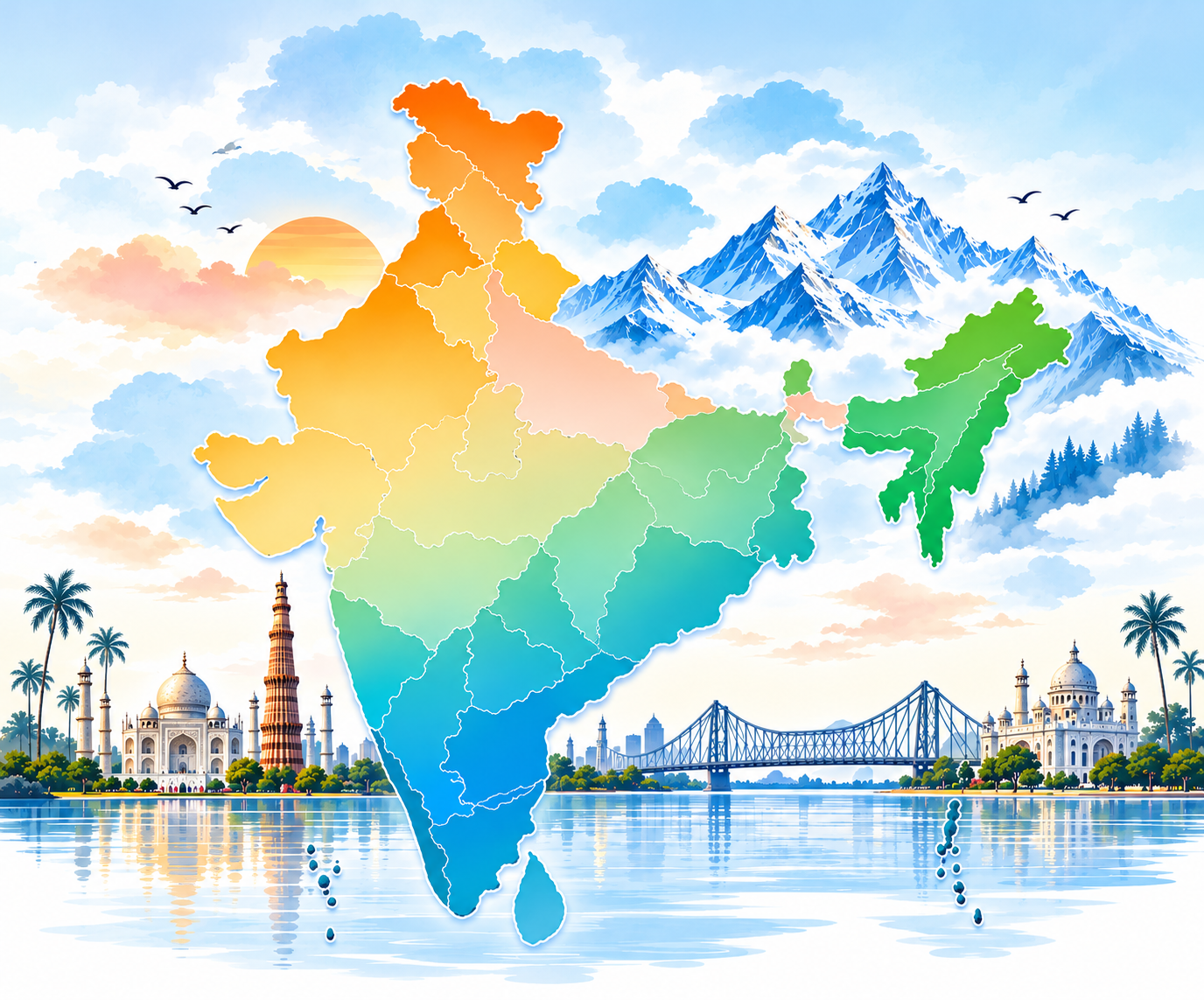

Ever wondered why coders from Chennai power Silicon Valley startups?
Or why Kerala tops human development rankings despite having fewer factories and natural resources?
The answer isn’t geography.
It isn’t luck.
It isn’t even money.
It’s education’s invisible hand—working silently, patiently, shaping India’s economy, society, and most importantly, the way Indians think.
Education doesn’t announce its impact with fireworks. It doesn’t trend daily on social media. But without it, India’s growth story would collapse like a house of cards.
As we move into Day 3 of our 30-day deep dive into India’s learning revolution, let’s uncover how education quietly:
- Fuels economic growth
- Stabilizes society
- Transforms fearful minds into bold, opportunity-seeking ones
And why your mindset might be the biggest beneficiary of all.
A Story from the Margins: Lakshmi’s Quiet Revolution
Lakshmi grew up in a Chennai slum. No college degree. No English fluency. No corporate connections.
What she had was access to an NGO-run education program. She learned:
- Basic tailoring
- Smartphone usage
- WhatsApp marketing
- Digital payments
She began stitching blouses for nearby homes. Then posted photos on local WhatsApp groups. Orders grew. Payments went digital. Customers spread the word.
Today, Lakshmi earns ₹50,000 a month, employs two women, and runs what is essentially a micro-enterprise.
No MBA.
No startup pitch deck.
Just education applied to real life.
This is how education shapes society—one story at a time.
Education as Economic Rocket Fuel
India’s economy didn’t grow by accident. Behind every GDP number lies a classroom, a skill center, a teacher, or a self-learner with a phone and curiosity.
The Big Picture
According to World Bank estimates, India’s educated workforce has contributed over $1 trillion to GDP growth since 2000.
How?
- IT and software exports
- Financial services
- Healthcare
- Engineering and manufacturing
- Startups and digital platforms
The Indian IT sector alone employs over 5 million people, most of whom came from middle-class or lower-middle-class backgrounds. Cities like Bengaluru, Hyderabad, Pune, and Chennai became global hubs not because of oil or minerals—but because of human capital.
Skill Hubs, Not Just Degree Factories
India’s real advantage lies in skills:
- Coding bootcamps
- Industrial training institutes (ITIs)
- Polytechnics
- Online platforms like Coursera, UpGrad, and YouTube
Education shifted India from a labor-surplus nation to a knowledge exporter.
Education and Society: The Silent Stabilizer
Economic growth means little if society collapses.
Education quietly strengthens the social fabric in ways that headlines rarely capture.
Literacy and Crime Reduction
In states like Bihar, increased literacy rates have correlated with a 20% drop in certain crime categories over the past two decades. Education provides alternatives—to violence, to desperation, to exploitation.
An educated person has:
- More to lose
- More to aspire to
- Better conflict-resolution skills
Educated Women Change Everything
When women are educated, societies transform.
Studies consistently show:
- Smaller, healthier families
- Lower infant mortality
- Better nutrition
- Higher household incomes
Kerala’s success story is inseparable from female education. Women there marry later, participate in decisions, and invest more in their children’s education—creating a virtuous cycle.
Education isn’t just personal progress.
It’s intergenerational progress.
The Mindset Makeover Education Creates
Perhaps education’s most underrated gift is how it rewires the mind.
From Scarcity to Abundance
Old mindset:
“Padho, naukri karo, settle ho jao.”
New mindset:
“Learn, build, adapt, create.”
Education shifts thinking from survival to possibility.
This is visible in Bengaluru’s startup ecosystem, where even IIM and IIT graduates drop out to build companies. Failure is no longer shameful—it’s data.
Confidence to Question
Education teaches people to ask:
- Why does this work this way?
- Can this be improved?
- Is there a better solution?
This questioning mindset is why:
- Indian-origin CEOs lead global companies
- Indian founders build unicorns
- Indian professionals adapt across industries
Education doesn’t just fill the mind.
It expands it.
Kerala vs. Resource-Rich States: A Lesson
Kerala lacks major industries, minerals, or large-scale manufacturing.
Yet it leads India in:
- Literacy
- Health indicators
- Life expectancy
- Human Development Index
Why?
Because Kerala invested in education first, not as an afterthought. The result is a population capable of migrating, adapting, and sending remittances back home—strengthening the local economy.
Education turned people into portable assets.
Education as Insurance Against Disruption
The future is uncertain:
- AI replacing jobs
- Climate change
- Global economic shocks
Degrees will expire. Skills will evolve. Industries will disappear.
But education builds:
- Learning agility
- Critical thinking
- Emotional resilience
These traits act as insurance in a volatile world.
Those who can learn, unlearn, and relearn will thrive.
India’s Knowledge Economy: The Road Ahead
The 2030 Vision
By 2030:
- India aims to close the skills gap through EdTech
- Knowledge sectors could contribute 50% of GDP
- India positions itself as a leader of the Global South
This won’t happen through exams alone.
It will require:
- Skill-first education
- Lifelong learning
- Vernacular content
- Affordable digital access
The foundations are already being laid.
Education Is Not Neutral
Education either:
- Liberates
- Or limits
It can produce:
- Obedient workers
- Or confident citizens
India’s challenge is not expanding access alone—but ensuring quality, relevance, and dignity in learning.
Wrapping Up: Education’s Greatest Gift Is You
Education quietly builds:
- The economy you earn from
- The society you live in
- The mindset you operate with
It teaches you to see options where others see walls.
Lakshmi didn’t wait for permission.
Kerala didn’t wait for factories.
Indian coders didn’t wait for validation.
They learned.
They adapted.
They built.
And that is education’s ultimate power.
A Question for You
What belief about success did education help you unlearn?
Share your thoughts.
Related stories


