Introduction
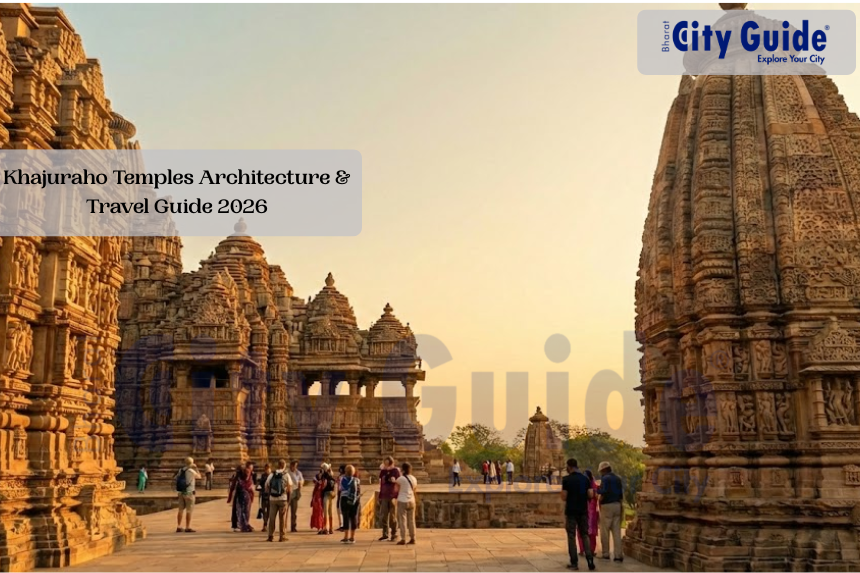
Khajuraho greets you quietly. No honking traffic, no rush—just sandstone temples rising from manicured lawns, their carvings catching the light as if they’re mid-conversation. I remember standing before the Kandariya Mahadeva Temple early in the morning, realizing that photos had completely failed to prepare me for the scale, detail, and confidence of its architecture.
- Introduction
- Why Visit Khajuraho in Madhya Pradesh
- Khajuraho Temples Architecture: What Makes Them Unique
- Western, Eastern & Southern Temple Groups Explained
- Best Time to Visit Khajuraho (2026)
- How to Reach Khajuraho
- Khajuraho Temples: Entry Fees & Timings
- 1-Day Khajuraho Temple Itinerary
- Photography & Etiquette Tips
- Common Misconceptions About Khajuraho
- FAQs: Khajuraho Travel Guide 2026
- Conclusion: Why Khajuraho Leaves a Mark
This Khajuraho Temples Architecture & Travel Guide 2026 is built for travelers who want context, not clichés. Often reduced to headlines about erotic sculptures, Khajuraho is actually one of India’s most sophisticated architectural achievements. This Khajuraho travel guide 2026 shows you how to experience it properly—without rushing, misunderstanding, or missing the point.
Why Visit Khajuraho in Madhya Pradesh
Khajuraho feels different from most heritage destinations in India.
- Calm, walkable temple complex
- Exceptionally preserved UNESCO World Heritage Site
- No overwhelming crowds compared to Rajasthan or Agra
Located in Madhya Pradesh, Khajuraho is ideal for travelers who enjoy history delivered slowly, with space to absorb details.
Khajuraho Temples Architecture: What Makes Them Unique
Built by the Chandela Dynasty
The temples were constructed between 950–1050 CE, during the Chandela rule. At their peak, over 80 temples stood here—around 25 survive today.
Architectural Highlights
- Nagara-style temple architecture
- Perfectly proportioned vertical shikharas
- Sculptures arranged in narrative bands
Contrary to popular belief, erotic carvings make up less than 10% of the artwork. The majority depict daily life—musicians, dancers, warriors, gods, and celestial beings.
Western, Eastern & Southern Temple Groups Explained
Western Group (Main Complex)
The most visited and architecturally refined.
Must-see temples:
- Kandariya Mahadeva Temple – tallest and most ornate
- Lakshmana Temple – early Chandela masterpiece
- Devi Jagdamba Temple – intricate sculptures
This is where Khajuraho’s reputation is born—and earned.
Eastern Group (Quieter, Underrated)
Includes both Hindu and Jain temples.
- Parsvanath Temple
- Ghantai Temple
Less crowded, excellent for slow exploration and photography.
Southern Group
- Duladeo Temple
- Chaturbhuj Temple
Best visited if you have extra time and interest in variations of the style.
Best Time to Visit Khajuraho (2026)
Ideal Months
- October to March: Pleasant weather, best for walking
- February: Hosts the Khajuraho Dance Festival
Avoid If Possible
- April–June: Extremely hot afternoons
- Monsoon (July–September): Green but humid
Morning and late afternoon light are best for both comfort and photography.
How to Reach Khajuraho
Despite its small size, Khajuraho is well connected.
- By air: Khajuraho Airport (direct flights from Delhi, Varanasi on select days)
- By train: Khajuraho Railway Station (connected via Jhansi)
- By road: Well-linked to Jhansi, Orchha, and Satna
Once in town, most temples are reachable by auto, bicycle, or on foot.
Khajuraho Temples: Entry Fees & Timings
Temple Timings
- Open daily: Sunrise to sunset
Entry Fee (Western Group – Approx.)
- Indians: ₹40
- Foreigners: ₹600
- Children under 15: Free
Eastern and Southern groups are generally free or minimally priced.
1-Day Khajuraho Temple Itinerary
| Time | Plan |
| 7:30–9:30 | Western Group temples (cooler, quieter) |
| 10:00–11:30 | Eastern Group Jain temples |
| 13:00–14:00 | Lunch in Khajuraho village |
| 15:30–17:00 | Southern Group temples |
| Evening | Sunset walk + optional sound & light show |
Indicative Costs
- Temple entry: ₹40–₹600
- Auto/cycle rental: Budget-friendly
- Sound & Light Show: ~₹250–₹300
Prices may change—reconfirm locally.
Photography & Etiquette Tips
- Photography is allowed, but be respectful
- Avoid loud commentary near sculptures
- Early morning gives softer shadows and fewer people
- Read carvings as storytelling panels, not isolated images
Khajuraho rewards curiosity over judgment.
Common Misconceptions About Khajuraho
- ❌ “It’s only about erotic art”
- ❌ “You need a guide to understand anything”
✔ It’s about life in totality—spiritual, social, and human
✔ A guide enhances the visit but isn’t mandatory if you read beforehand
FAQs: Khajuraho Travel Guide 2026
How much time is enough for Khajuraho?
One full day is sufficient for the main temples.
Is Khajuraho suitable for families?
Yes. The site is well-managed and respectful.
Do I need a guide at Khajuraho temples?
Not required, but helpful for architectural context.
Is Khajuraho safe for solo travelers?
Yes—it’s calm, tourist-friendly, and walkable.
Conclusion: Why Khajuraho Leaves a Mark
Khajuraho doesn’t shout its brilliance. It waits for you to notice proportions, patterns, and philosophy carved into stone a thousand years ago. You don’t leave with adrenaline—you leave with perspective.