Introduction
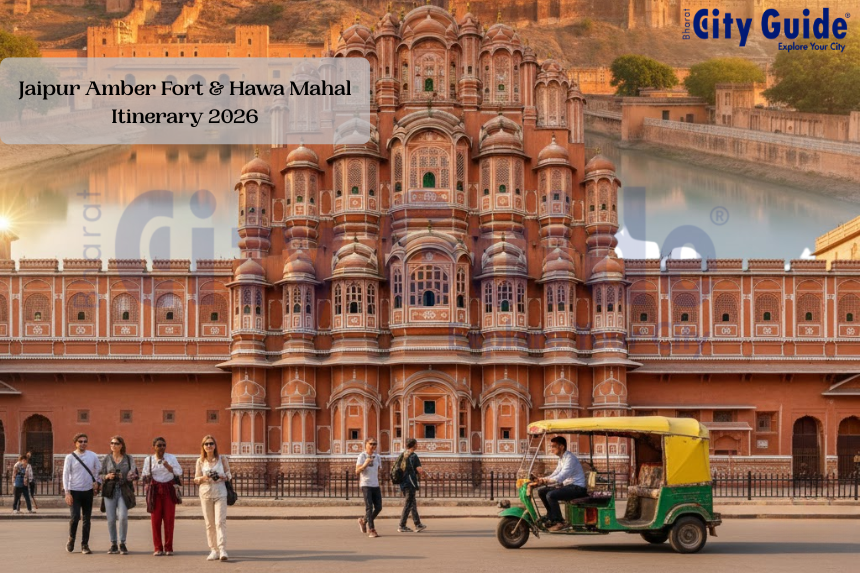
I stepped into Amber Fort just as the first light brushed the Aravalli hills, the stone ramparts glowing honey-gold above Maota Lake. By sunset, I was back in the old city, watching the pink façade of Hawa Mahal shimmer over the noise of Jaipur’s bazaars. That contrast—quiet hilltop grandeur to street-level chaos—is what makes this city unforgettable.
- Introduction
- Why Visit Jaipur in 2026
- Best Time to Visit Jaipur, Amber Fort & Hawa Mahal
- How to Reach Jaipur & Get Around
- 1-Day Jaipur Amber Fort & Hawa Mahal Itinerary
- Timings, Entry Fees & Dress Tips (2026)
- Sample Full-Day Schedule (With Costs)
- Photography Tips & Lesser-Known Angles
- Local Hacks Most Guides Skip
- FAQs: Jaipur Travel Guide 2026
- Conclusion: Why This Day Works
This Jaipur Amber Fort & Hawa Mahal itinerary is built for real travelers in 2026. It blends history with pacing, photo spots with practical advice, and enough flexibility to enjoy the city rather than rush through it. If you’re following a Jaipur travel guide 2026, this is the day that defines the Pink City.
Why Visit Jaipur in 2026
Jaipur feels timeless, but 2026 is a particularly good year to go.
- Improved roads between forts and viewpoints
- Lively cultural calendar, including the Jaipur Literature Festival
- Better crowd management at major monuments
More than anything, Jaipur rewards early risers and slow walkers. It’s a city that reveals itself between moments, not just monuments.
Best Time to Visit Jaipur, Amber Fort & Hawa Mahal
The best time to visit Jaipur is from October to March. Days are pleasant, evenings are cool, and walking through forts doesn’t feel like a test of endurance.
- October–March: Ideal weather, peak season
- April–June: Extremely hot; start very early
- July–September: Greener hills, humid afternoons
For Amber Fort, aim to arrive by 8:00 AM. For Hawa Mahal, late afternoon into sunset works best.
How to Reach Jaipur & Get Around
Jaipur is one of North India’s easiest cities to access.
- By air: Jaipur International Airport (well-connected domestically)
- By train: Direct trains from Delhi, Agra, Mumbai
- By road: Smooth highways from Delhi and Agra
Distances:
- City center to Amber Fort: ~11 km
- Amber Fort to Hawa Mahal (old city): ~30–40 minutes by car
Local transport options include taxis, autos, and app-based cabs. For a full day, hiring a car is usually the least stressful.
1-Day Jaipur Amber Fort & Hawa Mahal Itinerary
Morning at Amber Fort
Amber Fort isn’t just a fort—it’s a layered complex of gates, courtyards, and palaces climbing the hillside.
Must-see highlights:
- Suraj Pol & Jaleb Chowk: Grand entry sequence
- Sheesh Mahal: Mirror palace that still feels magical
- Quiet ramparts above Maota Lake: Often skipped, worth the walk
Early morning gives you softer light, fewer tour groups, and time to explore side courtyards without pressure.
Afternoon in Jaipur Old City
After Amber, head back toward the city.
Good ways to spend the afternoon:
- Lunch at a traditional Rajasthani restaurant
- Walk Johari Bazaar for jewelry and textiles
- Explore Tripolia Bazaar for local crafts
This break matters—it resets your energy before the second monument.
Golden Hour at Hawa Mahal
Hawa Mahal is smaller than it looks in photos, but its impact comes from timing and perspective.
Inside, the narrow corridors and jharokhas tell stories of royal women watching city life unseen. Outside, the façade truly comes alive as the sun drops.
Best moments:
- Late afternoon interior visit
- Sunset photography from across the street or nearby cafés
Timings, Entry Fees & Dress Tips (2026)
Amber Fort
- Timings: ~8:00 AM – 5:30 PM
- Entry fee (approx):
- Indians: ₹50
- Foreigners: ₹550
- Indians: ₹50
Hawa Mahal
- Timings: ~9:00 AM – 5:00 PM
- Entry fee (approx):
- Indians: ₹50
- Foreigners: ₹200
- Indians: ₹50
Prices can change—always reconfirm locally.
Dress tips:
Comfortable footwear is essential. Light, breathable clothing works best, with something modest for temple areas inside forts.
Sample Full-Day Schedule (With Costs)
| Time | Plan |
| 7:30–8:00 | Drive from Jaipur center to Amber Fort |
| 8:00–11:00 | Explore Amber Fort (courtyards, Sheesh Mahal, ramparts) |
| 11:00–12:00 | Photo stop near Maota Lake / optional Jaigarh view |
| 1:00–3:00 | Lunch + bazaar walk in old city |
| 3:00–4:30 | Hawa Mahal interior visit |
| 4:30–6:30 | Sunset street photography of Hawa Mahal façade |
This pacing avoids burnout while covering the highlights.
Photography Tips & Lesser-Known Angles
Amber Fort
- Walk higher ramparts for quieter views over Maota Lake
- Reflection shots near Sheesh Mahal work best mid-morning
Hawa Mahal
- Morning light = softer pink tones
- Evening light = dramatic contrast and street energy
- Cafés opposite the façade offer elevated angles
Alt-text ideas:
- Panoramic view of Amber Fort above Maota Lake
- Hawa Mahal façade at sunset in Jaipur
Local Hacks Most Guides Skip
- Start Amber early—queues build fast after 9 AM
- Ask about composite tickets if visiting multiple sites
- On a 2-day Jaipur plan, pair this day with Nahargarh Fort at sunset
These small tweaks make a big difference to your experience.
FAQs: Jaipur Travel Guide 2026
What is the best time to visit Amber Fort?
Early morning, ideally right at opening time.
How much time is enough for Hawa Mahal?
About 1–1.5 hours including photos.
Can you do Amber Fort and Hawa Mahal in one day?
Yes—comfortably, with an early start and a mid-day break.
Conclusion: Why This Day Works
Amber Fort shows Jaipur’s royal scale; Hawa Mahal shows its everyday rhythm. Together, they capture the city’s personality—grand, colorful, and still very much alive.
As part of a Jaipur travel guide 2026, this itinerary balances depth with ease. You’ll leave tired, yes—but also satisfied in that quiet way that means you did it right.