Everyday Health Situation: Understanding Drug Safety
Imagine you’re a young IT professional in Bengaluru, battling seasonal allergies during peak pollen season. Your colleague recommends a newly launched tablet, calling it “miracle-tested.”
- Medical Explanation: How Drugs Are Developed & Tested
- Why This Matters for Patients in India
- Common Misconceptions
- What Doctors Usually Recommend
- Supporting Medicine with Lifestyle Measures
- Future Outlook: Medical Progress in India (2030–2040)
- When to Seek Medical Help
- Responsible, Reassuring Conclusion
- Patient-Focused Question
- FAQs: Drug Development & Testing in India (2026 Edition)
You hesitate: How do we know it’s safe? Will it work for me as it did for her?
In India, where hundreds of new drugs flood pharmacies yearly, understanding the rigorous development and testing process builds confidence in your medication. This knowledge also helps avoid the risk of untested shortcuts or misleading claims.
Medical Explanation: How Drugs Are Developed & Tested
Drug development is a long, expensive, and highly regulated process, taking 10–15 years and costing millions of dollars, with only 1 in 5,000 compounds reaching the market.
Step 1: Discovery and Laboratory Research
Scientists start by identifying a disease target—for example, histamine receptors that trigger allergy symptoms. They then design molecules that can block or modify this target.
- Goal: Find a molecule that is both effective and safe in theory.
- Hundreds of molecules are tested in cell cultures to identify the most promising candidates.
Step 2: Pre-Clinical Testing
Before human trials, drugs are tested on animals to evaluate:
- Safety: Does it harm vital organs?
- Efficacy: Does it work as intended?
- Dosage estimates: Safe starting dose for humans.
Key point: Even promising pre-clinical drugs often fail at this stage—only a fraction progress.
Step 3: Clinical Trials in Humans
Human trials are phased to systematically ensure safety and effectiveness:
Phase 1: Safety & Dosage
- Participants: 20–100 healthy volunteers
- Objective: Assess safe dosage range, side effects, metabolism
- Duration: Months
Phase 2: Effectiveness & Optimal Dose
- Participants: 100–300 patients with the target condition
- Objective: Determine if the drug works, refine dosage
- Example: Allergy tablet reduces sneezing and watery eyes in 70% of participants
Phase 3: Confirmatory Trials
- Participants: 1,000–3,000 patients across multiple centers
- Objective: Confirm efficacy versus existing treatments, detect rare side effects
- Regulatory submission: Data is sent to India’s CDSCO for approval
Phase 4: Post-Market Surveillance
- Monitors long-term safety, rare side effects, or interactions
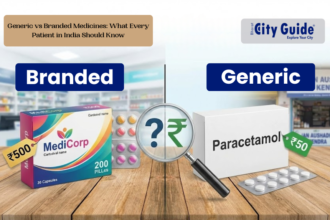
- Example: Paracetamol generics in India match branded versions in safety and efficacy, proven through ongoing monitoring
India’s Unique Context:
- Home to 20% of global generics
- Ensures affordable, rigorously tested medicines for patients nationwide
- CDSCO follows standards aligned with FDA and WHO guidelines
Why This Matters for Patients in India
India produces over 60,000 generic drugs annually, but not all shortcuts are legitimate. Understanding the testing process allows you to:
- Evaluate “newly launched” drugs critically
- Avoid unproven or fast-tracked remedies
- Recognize that adherence to prescribed medication is backed by science, not marketing
- Protect yourself from risks amid rising NCDs like seasonal allergies, asthma, and urban pollution-related conditions
Common Misconceptions
- Myth: “New drugs are riskier than old ones.”
Fact: All drugs undergo identical rigorous testing; “new” simply refers to recent approval. - Myth: “Animal tests guarantee human results.”
Fact: Most drugs fail during human trials—90% of pre-clinical drugs never reach Phase 3. - Myth: “Pharma companies rush drugs for profit.”
Fact: Phase 3 alone lasts 3–5 years, and regulators reject 70% of applications for safety or efficacy concerns.
What Doctors Usually Recommend
- Established drugs remain the first choice unless clinical trial data shows clear benefits from a new medicine.
- Doctors often explain trial outcomes:
“This allergy medicine reduced symptoms by 70% in Phase 3 trials compared to placebo.” - Generics are equally safe and effective—cheaper, widely available, and rigorously tested.
Patient Tip: Always ask about the drug’s clinical trial history before starting a new prescription.
Supporting Medicine with Lifestyle Measures
Medicine works best when combined with lifestyle interventions:
- Allergy management: Masks during high pollen days, nasal rinses, air purifiers in urban homes
- Immunity boosters: Tulsi kadha, balanced diet rich in antioxidants
- Regular check-ups: Government apps and schemes enable early detection of chronic conditions or side effects
These steps improve outcomes and reduce reliance on symptomatic medication alone.
Future Outlook: Medical Progress in India (2030–2040)
- AI in Drug Discovery:
- Pilots by ICMR-AI programs can predict potential drug success 50% faster
- Reduces lab testing, accelerates development timelines
- Pilots by ICMR-AI programs can predict potential drug success 50% faster
- mRNA and Novel Therapies:
- Post-COVID, India is exploring mRNA-based drugs for allergies and infectious diseases
- Faster and more targeted than traditional approaches
- Post-COVID, India is exploring mRNA-based drugs for allergies and infectious diseases
- 3D-Printed Personalized Medicines:
- Tailored tablets with precise doses for individual patients
- Could reduce side effects and improve adherence
- Tailored tablets with precise doses for individual patients
- Shortened Timelines:
- Advanced AI, genomics, and personalized medicine may cut development from 10–15 years to ~5 years
- Advanced AI, genomics, and personalized medicine may cut development from 10–15 years to ~5 years
When to Seek Medical Help
- If you experience rash, breathing difficulty, unexplained fatigue, or severe gastrointestinal issues after starting a new drug, contact your doctor immediately.
- Early reporting ensures safety, dose adjustment, or alternative medications.
Responsible, Reassuring Conclusion
From laboratory experiments to post-market surveillance, the journey of a drug is meticulous, evidence-driven, and highly regulated.
Whether choosing a brand-name or generic, remember:
- Every approved medicine has passed rigorous testing phases
- Your health isn’t a gamble—it’s backed by science
- Discuss new medications openly with your doctor to understand their clinical trial story
Being informed empowers you to adhere confidently to prescriptions and integrate medicine safely into your daily life.
Patient-Focused Question
What new medicine has crossed your pharmacy path lately—and would you now ask your doctor about its testing story before trying it?
FAQs: Drug Development & Testing in India (2026 Edition)
Q1: How long does drug development take in India?
A: Typically 10–15 years from lab discovery to market approval, including pre-clinical and four phases of human trials.
Q2: Are generics as safe as branded drugs?
A: Yes. CDSCO ensures generics match branded safety and efficacy, often at a lower cost.
Q3: Can new drugs be trusted immediately after launch?
A: Yes, if they have successfully completed Phase 3 trials and received regulatory approval. Phase 4 monitoring continues post-market.
Q4: How is AI helping drug development in India?
A: AI predicts molecular effectiveness, optimizes clinical trial design, and reduces development time by up to 50% in pilot studies.
Q5: Should I avoid new drugs for safety reasons?
A: Not necessarily. Discuss trial data with your doctor and consider both benefits and side effects. Established regulatory oversight ensures safety.
Key Medical Takeaways
- Drug development is a 10–15 year, multi-phase process involving labs, animals, and human trials.
- Phases 1–3 ensure safety and efficacy; Phase 4 monitors long-term effects.
- India’s CDSCO and global standards ensure generics and new drugs are safe.
- Misconceptions about “rushed drugs” ignore mandatory regulatory rigor.
- AI, mRNA, and 3D printing promise faster, personalized, and precise drug development in the near future.