Introduction
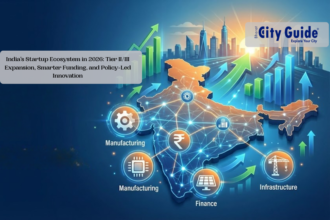
A few years ago, the phrase “Indian’s startup ecosystem” almost automatically meant Bengaluru, Delhi NCR, or Mumbai. Not anymore. The India startup ecosystem is stretching its legs—reaching smaller cities, maturing its funding mindset, and aligning more closely with policy reforms.
- India’s Startup Ecosystem: Where Things Stand Today
- Tier II and Tier III Cities: The New Startup Frontiers
- Funding Trends: Fewer Cheques, Better Companies
- High-Potential Sectors Shaping the Startup Ecosystem
- Startup Policy 2026: What’s Changed?
- Challenges Startups Still Face
- Why This Phase Matters for the Future
- FAQs: India Startup Ecosystem 2026
- Conclusion: A More Mature, More Resilient Ecosystem
As we head into 2026, startups aren’t just chasing growth at any cost. They’re choosing sustainability, governance, and real-world impact. Tier II and Tier III cities like Kochi and Jaipur are stepping into the spotlight, investors are writing fewer but smarter cheques, and sectors like EVs, digital health, and SaaS are emerging as long-term winners under the Startup Policy 2026 framework.
This is not a slowdown. It’s a reset—and arguably, a healthier one.
India’s Startup Ecosystem: Where Things Stand Today
India remains one of the world’s largest startup hubs by volume. What’s changed is how startups are being built and funded.
Key shifts defining the current phase:
- Expansion beyond metro cities
- Selective funding with emphasis on governance
- Policy-backed innovation in strategic sectors
The ecosystem feels less like a gold rush and more like a marathon—measured, disciplined, and focused on endurance.
(Internal link suggestion: “Evolution of India’s startup ecosystem”)
Tier II and Tier III Cities: The New Startup Frontiers
Why Smaller Cities Are Gaining Ground
Rising costs and talent saturation in metros pushed founders to look elsewhere. What they found was surprising—deep talent pools, lower burn rates, and supportive local ecosystems.
Cities like Kochi, Jaipur, Indore, and Coimbatore are emerging as startup-friendly hubs.
Key advantages include:
- Lower office and living costs
- Access to regional talent
- State-level startup incentives
- Less competitive hiring markets
A startup built in Jaipur today often runs at half the cost of one in Bengaluru—without sacrificing quality.
Kochi and Jaipur: Case Studies in Growth
- Kochi has become a quiet hotspot for SaaS, deep tech, and maritime-linked innovation, backed by strong digital infrastructure and incubators.
- Jaipur is attracting D2C brands, fintech platforms, and EV startups, leveraging its logistics access and skilled workforce.
These cities aren’t replacing metros—they’re complementing them.
(Internal link suggestion: “Tier II cities driving startup growth in India”)
Funding Trends: Fewer Cheques, Better Companies
Selective Capital Is the New Normal
The funding environment in 2026 rewards discipline over hype. Investors are asking harder questions—and that’s a good thing.
Funding priorities now include:
- Clear unit economics
- Strong corporate governance
- Transparent financial reporting
- Real customer traction
Founders who once chased valuations are now chasing viability.
Governance as a Growth Lever
Good governance is no longer a checkbox—it’s a competitive advantage.
Startups with:
- Independent boards
- Clear compliance frameworks
- Ethical leadership
are finding it easier to raise capital, partner with enterprises, and scale globally.
In many ways, governance has become the new growth hack.
High-Potential Sectors Shaping the Startup Ecosystem
Electric Vehicles (EVs): Charging Ahead
India’s EV startup ecosystem is moving beyond scooters and cars.
Hot areas include:
- Battery technology
- Charging infrastructure
- Fleet electrification
- EV software and analytics
Policy support and climate urgency have turned EVs into a serious, long-term opportunity.
Digital Health: From Apps to Infrastructure
Digital health startups are evolving fast.
Focus areas include:
- Telemedicine platforms
- Health data management
- AI-based diagnostics
- Affordable care delivery
The demand is simple: accessible, scalable healthcare—and startups are filling gaps the system struggles with.
SaaS: India’s Quiet Global Export
SaaS continues to be one of India’s strongest startup bets.
Why SaaS works:
- Global customer base
- Predictable revenue models
- Talent-driven, not asset-heavy
Many SaaS startups from Tier II cities are now selling to global enterprises, proving geography is no longer a limitation.
(Internal link suggestion: “India SaaS startups going global”)
Startup Policy 2026: What’s Changed?
The Startup Policy 2026 isn’t flashy—but it’s practical.
Key reforms include:
- Easier compliance for early-stage startups
- Incentives for innovation in priority sectors
- Support for incubators and accelerators in smaller cities
- Stronger focus on governance and accountability
Instead of blanket incentives, the policy rewards seriousness and sustainability.
Challenges Startups Still Face
Even with progress, challenges remain:
- Longer fundraising cycles
- Pressure to show profitability early
- Talent retention in smaller cities
- Regulatory learning curves
The difference now is maturity. Founders are building with eyes open.
Why This Phase Matters for the Future
This phase of the India startup ecosystem feels like a course correction. The excesses of the past are being replaced by clarity.
Startups today are:
- Solving real problems
- Building for scale, not headlines
- Thinking globally from day one
That’s how durable ecosystems are built.
FAQs: India Startup Ecosystem 2026
Why are startups moving to Tier II and III cities?
Lower costs, better talent access, and supportive local policies make smaller cities attractive.
Is funding drying up for startups?
No. Funding is more selective, focusing on strong fundamentals and governance.
Which sectors look most promising in 2026?
EVs, digital health, and SaaS lead due to policy support and market demand.
What is Startup Policy 2026 about?
It focuses on sustainable growth, compliance ease, and innovation in priority sectors.
Can startups from smaller cities scale globally?
Yes. With digital tools and remote teams, geography is no longer a barrier.
Conclusion: A More Mature, More Resilient Ecosystem
The India startup ecosystem in 2026 is quieter—but stronger. Expansion into Tier II and III cities, smarter funding decisions, and policy-backed innovation have laid the foundation for long-term success.
This isn’t the end of the startup boom. It’s the beginning of something better—an ecosystem built not just on ambition, but on accountability, resilience, and real value creation.
Sometimes, slowing down is exactly how you move forward.