Introduction
Technology is the defining thread of human progress. From the first sharpened stone used to cut meat to the silicon chips powering artificial intelligence, every era of humanity has been shaped by tools and innovations. The technology evolution timeline reveals not only how humans solved survival challenges, but also how technology reshaped societies, economies, and civilizations.
- Introduction
- The Dawn of Technology: Stone Tools (3.4 Million Years Ago)
- Mastery of Fire: Controlling Nature (Around 2.4 Million Years Ago)
- Agricultural Technology: The Neolithic Revolution (Around 10,000 BCE)
- Metal Ages: Bronze and Iron Transform Societies
- Classical and Medieval Innovations: Knowledge Systems Expand
- The Industrial Revolution: Steam and Mechanization (18th Century)
- The Electrical and Communication Age: Powering the Modern World
- The Digital Revolution: From Transistors to Silicon Chips
- Artificial Intelligence and Beyond: The Current Frontier
- Why the Technology Evolution Timeline Matters
- Conclusion
This journey is not a straight line of progress, but a story of experimentation, adaptation, and transformation. Each breakthrough built upon earlier discoveries, accelerating human capability and expanding our influence across the planet. Understanding this timeline helps us appreciate where we came from and where we are headed in an increasingly digital future.
The Dawn of Technology: Stone Tools (3.4 Million Years Ago)
The earliest known stone tools date back approximately 3.4 million years, discovered in Lomekwi, Kenya. These tools, often simple flakes and cores, marked the first intentional manipulation of natural objects for practical use. Early hominins used stone tools primarily for cutting meat, breaking bones for marrow, and processing plant materials.
This innovation fundamentally changed survival strategies. Instead of relying solely on physical strength or scavenging, early humans enhanced their abilities through tools. Stone tools increased access to high-calorie foods, supporting brain growth and setting the stage for cognitive evolution.
Stone technology also introduced the concept of learning and transmission. Skills were passed down through observation and practice, laying the foundation for culture and shared knowledge.
Mastery of Fire: Controlling Nature (Around 2.4 Million Years Ago)
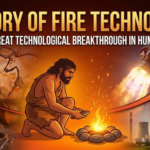
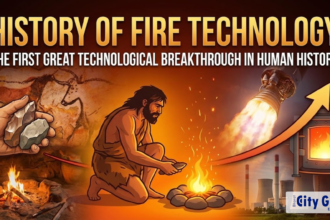
One of the most transformative moments in the technology evolution timeline was the control of fire, estimated to have occurred around 2.4 million years ago. Fire was more than a tool; it was a force that reshaped human biology and society.
Fire provided warmth, protection from predators, and extended daylight hours. Cooking food made nutrients more accessible, reduced disease, and further supported brain development. Socially, fire encouraged gathering, communication, and early forms of community life.
With fire, humans began to influence their environment in unprecedented ways. Landscapes could be cleared, animals driven, and habitats adapted. This was the first major step toward environmental control rather than mere adaptation.
Agricultural Technology: The Neolithic Revolution (Around 10,000 BCE)
The shift from hunting and gathering to agriculture marks another major milestone in the technology evolution timeline. The Neolithic Revolution introduced farming tools such as sickles, plows, and irrigation systems.
Agriculture allowed humans to settle in one place, leading to permanent villages and population growth. Food surpluses enabled specialization, as not everyone needed to farm. This gave rise to artisans, traders, leaders, and early scientists.
Technologies like pottery for storage and weaving for clothing improved daily life. Over time, agriculture laid the groundwork for social hierarchies, governance, and economic systems that define civilizations today.
Metal Ages: Bronze and Iron Transform Societies
The discovery of metalworking ushered in the Bronze Age (around 3300 BCE) and later the Iron Age (around 1200 BCE). These periods were defined by advances in tools, weapons, and construction techniques.
Bronze tools were stronger and more durable than stone, improving agriculture and warfare. Iron, more abundant and tougher, further revolutionized productivity and military power.
Metal technology enabled large-scale infrastructure, from fortified cities to advanced transportation. Trade networks expanded as metals and finished goods were exchanged across regions, connecting early civilizations and spreading innovation.
Classical and Medieval Innovations: Knowledge Systems Expand
During classical antiquity and the medieval era, technology evolved alongside philosophy, science, and governance. The Greeks and Romans developed engineering marvels such as aqueducts, roads, and mechanical devices.
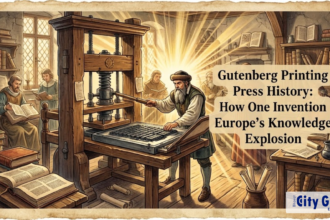
In medieval times, innovations like the water wheel, windmill, mechanical clock, and printing press transformed economies and knowledge dissemination. The printing press, in particular, accelerated literacy and education, breaking the monopoly of knowledge held by elites.
These technologies created the conditions for scientific inquiry and laid the foundation for modern engineering and industrial systems.
The Industrial Revolution: Steam and Mechanization (18th Century)
The Industrial Revolution of the 18th century represents one of the most dramatic shifts in the technology evolution timeline. The invention and refinement of the steam engine transformed manufacturing, transportation, and labor.
Factories replaced hand production, dramatically increasing output and efficiency. Railways and steamships connected continents, shrinking the world and enabling global trade. Urbanization surged as people moved to cities for industrial work.
While the Industrial Revolution brought economic growth and innovation, it also introduced challenges such as labor exploitation, pollution, and social inequality. These issues continue to influence discussions around technological responsibility today.
The Electrical and Communication Age: Powering the Modern World
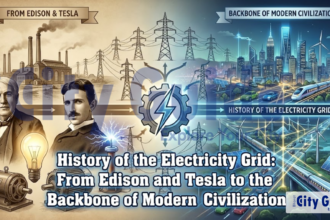
The late 19th and early 20th centuries saw rapid advancements in electricity and communication. Innovations such as the light bulb, telegraph, telephone, and radio changed how people lived and interacted.
Electricity revolutionized industry and domestic life, powering factories, homes, and cities. Communication technologies reduced the time it took to share information from weeks to seconds, reshaping politics, commerce, and culture.
This era marked the beginning of a truly interconnected world, setting the stage for digital transformation.
The Digital Revolution: From Transistors to Silicon Chips
The invention of the transistor in 1947 launched the Digital Revolution. Transistors replaced bulky vacuum tubes, enabling smaller, faster, and more reliable electronic devices.
Silicon chips became the foundation of computers, smartphones, and modern electronics. Personal computers in the late 20th century brought computing power into homes and workplaces, transforming productivity and creativity.
The internet further accelerated change, enabling instant global communication, e-commerce, and access to information. Digital technology reshaped education, entertainment, and nearly every industry.
Artificial Intelligence and Beyond: The Current Frontier
Today, humanity stands at the edge of another major shift in the technology evolution timeline. Artificial intelligence, machine learning, biotechnology, and renewable energy are redefining what technology can achieve.
AI systems can analyze vast amounts of data, automate complex tasks, and assist in scientific discovery. Biotechnology is extending human health and lifespan, while renewable energy technologies aim to address climate challenges.
Unlike earlier eras, modern technology evolves at an exponential pace, raising ethical questions about privacy, employment, and human identity. The challenge now is not just innovation, but responsible and inclusive progress.
Why the Technology Evolution Timeline Matters
Understanding the technology evolution timeline helps us see technology as a human story rather than a series of isolated inventions. Each advancement reflects human needs, creativity, and values of its time.
Technology enabled humanity’s expansion from small hunter-gatherer groups to complex global civilizations. It shaped how we communicate, work, govern, and understand the universe.
By studying this journey, we gain perspective on current technological debates and make more informed choices about the future we want to build.
Conclusion
From stone tools to silicon chips, the evolution of technology is inseparable from the evolution of humanity itself. Each breakthrough expanded human potential while introducing new challenges.
As we move deeper into the age of artificial intelligence and advanced digital systems, reflecting on the technology evolution timeline reminds us that progress is most powerful when guided by wisdom, ethics, and shared human values.
The story of technology is far from over, and humanity continues to shape, and be shaped by, the tools it creates.