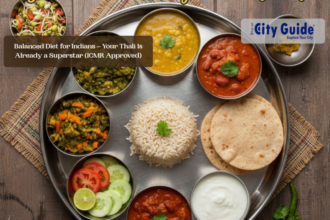
Ever stared at your thali and wondered why dal makes you feel comfortably full, but that extra paratha leaves you sleepy and sluggish?
You’re not imagining things—and you’re definitely not alone.
- The Everyday Scene: Nutrition in Real Indian Life
- What Is Nutrition, Really? (The No-Jargon Definition)
- Macronutrients: The Big Three Your Body Can’t Ignore
- Micronutrients: The Tiny Powerhouses
- ICMR’s “My Plate” – Made for Indian Meals
- Fermented Foods: India’s Gut Health Secret
- Practical Wins (No Kitchen Overhaul Needed)
- Common Nutrition Traps to Avoid
- Quick Indian Meal Guide (2026-Friendly)
- Why Nutrition Pays Off Long-Term
- Conclusion: You’re Already Halfway There
- Frequently Asked Questions (FAQ)
- Today’s Food Habit Tip
- Reflection Question
Most of us eat every single day on autopilot. We know what we’re eating, but rarely why it makes us feel energetic, bloated, focused, or drained. Nutrition often sounds like something meant for doctors, gym bros, or people on extreme diets—but at its core, nutrition is simply how food fuels your body, repairs it, and keeps it running smoothly.
No calorie-counting apps.
No scary charts.
No boring lecture.
Let’s break nutrition down the way it actually shows up in everyday Indian life—your chai breaks, your thali, your late dinners, and your long workdays.
The Everyday Scene: Nutrition in Real Indian Life
Picture this.
It’s a weekday morning in Rajkot. You’re already late. Breakfast is chai and a couple of biscuits because “something is better than nothing.” Lunch is rice, a little sabzi, maybe dal if you’re lucky. By 3 pm? You’re exhausted, foggy, craving something sweet or salty.
That afternoon crash isn’t laziness—it’s nutritional imbalance.
Your body is like a smartphone:
- No battery → shuts down
- Wrong charger → heats up
- Poor signal → slow performance
Food works the same way. When you miss key nutrients, your body still runs—but badly.
What Is Nutrition, Really? (The No-Jargon Definition)
Nutrition is the process by which your body uses food as:
- Fuel (energy to function)
- Building material (repairing muscles, organs, skin)
- Regulators (keeping hormones, immunity, digestion in balance)
That’s it.
Every bite you eat sends instructions to your body:
- “Stay alert”
- “Store fat”
- “Repair tissue”
- “Spike sugar”
- “Calm inflammation”
Nutrition isn’t dieting.
It’s communication between food and your body.
Macronutrients: The Big Three Your Body Can’t Ignore
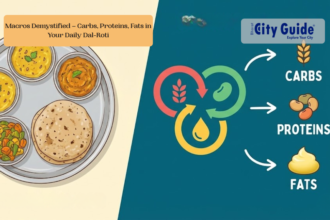
Macronutrients are nutrients your body needs in large amounts. According to ICMR and global nutrition research (still relevant in 2026), these are non-negotiable.
1. Carbohydrates: Your Body’s Main Energy Source
Carbs have a bad reputation—but they’re not villains.
Your brain, muscles, and nervous system run primarily on glucose, which comes from carbs.
Indian reality:
Around 60–65% of calories in Indian diets come from carbs—which is fine if the quality is right.
✔️ Good carbs
- Whole wheat roti
- Millets (jowar, bajra, ragi)
- Brown rice
- Oats
- Fruits
- Vegetables
❌ Low-quality carbs
- White rice in excess
- Maida (biscuits, naan, bakery items)
- Sugary drinks
- Refined snacks
Why white rice + biscuits cause crashes:
They digest fast → spike blood sugar → sudden drop → fatigue and cravings.
2. Protein: The Repair and Strength Nutrient
Protein is not just for gym-goers.
Every cell in your body—muscles, skin, hair, enzymes, hormones—depends on protein.
Big Indian myth:
“Protein only comes from eggs or meat.”
Completely false.
✔️ Excellent vegetarian protein sources
- Dal (toor, moong, masoor)
- Chana, rajma, lobia
- Paneer, curd
- Sprouts
- Soy
- Nuts and seeds
Why dal makes you feel full:
Protein slows digestion → steady energy → fewer cravings.
ICMR data confirms that well-planned vegetarian diets fully meet protein needs.
3. Fats: The Most Misunderstood Nutrient
Fat does NOT make you fat.
Excess calories + poor food choices do.
Healthy fats are essential for:
- Hormone production
- Brain health
- Absorbing vitamins A, D, E, K
- Reducing inflammation
✔️ Healthy Indian fat sources
- Mustard oil
- Groundnut oil
- Ghee (in moderation)
- Nuts & seeds
- Coconut (limited amounts)
❌ Problem fats
- Reused frying oil
- Trans fats (bakery snacks, packaged food)
Kitchen upgrade:
Switching from reused oil to mustard oil alone improves heart health markers.
Micronutrients: The Tiny Powerhouses
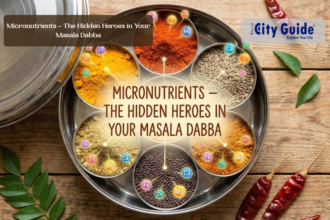
Micronutrients include vitamins and minerals, needed in small amounts—but their impact is massive.
Deficiencies (very common in India) cause:
- Low energy (iron, B12)
- Weak immunity (vitamin C, zinc)
- Bone issues (vitamin D, calcium)
- Poor focus (iodine, omega-3)
Color rule:
The more colors on your plate, the better the micronutrient coverage.
ICMR’s “My Plate” – Made for Indian Meals
The ICMR My Plate for the Day is practical and thali-friendly:
- 🥗 Half the plate: Vegetables, fruits, greens
- 🌾 One quarter: Cereals (roti, rice, millets)
- 🫘 One quarter: Protein (dal, pulses, dairy, nuts)
This works beautifully with:
- Roti + dal + sabzi
- Rice + sambar + vegetables
- Khichdi + curd + salad
No fancy food required.
Fermented Foods: India’s Gut Health Secret
A Stanford-led study (still relevant in 2026) links fermented foods to:
- Better gut bacteria
- Stronger immunity
- Reduced inflammation
Indian diets already include them:
- Curd
- Buttermilk (chaas)
- Idli, dosa
- Kanji
- Pickles (traditional, not ultra-processed)
Your sambar + idli combo?
That’s nutrition science, not coincidence.
Practical Wins (No Kitchen Overhaul Needed)
Small changes beat dramatic diets every time.
Easy swaps
- White rice → brown rice or millet khichdi (2x/week)
- Poha alone → oats upma with veggies
- Packaged juice → chaas or lemon water
- Fried snacks → roasted chana or peanuts
Protein boost on a budget
- Add a handful of sprouts to lunch
- Extra spoon of dal at dinner
- Curd with meals
Common Nutrition Traps to Avoid
❌ Trap 1: “I need to count calories”
You don’t—unless medically required.
Focus on:
- Quality
- Balance
- Portion awareness
❌ Trap 2: “Vegetarian food isn’t enough”
False. Variety is the key.
❌ Trap 3: “Healthy food is boring”
Your thali already proves otherwise.
Quick Indian Meal Guide (2026-Friendly)
Breakfast
- Oats upma with vegetables
- Or vegetable omelette + roti
- Or idli + sambar
Lunch
- Roti or rice
- Moong dal
- Bhindi / lauki / mixed sabzi
- Salad
Snack
- Chaas
- Fruit + nuts
- Roasted makhana
Dinner
- Light khichdi
- Curd
- Steamed vegetables
Simple. Sustainable. Realistic.
Why Nutrition Pays Off Long-Term
Consistent, balanced nutrition:
- Reduces diabetes risk (major concern in India)
- Improves focus and creativity
- Strengthens immunity
- Keeps energy stable for long workdays
- Supports healthy aging
It’s not about six-packs.
It’s about feeling good in your own body—everyday.
Conclusion: You’re Already Halfway There
Nutrition doesn’t require imported superfoods or extreme discipline.
Your thali already contains the answers.
Dal, sabzi, roti, curd—these are powerful tools when balanced right.
Start small:
- Add more colors
- Improve carb quality
- Respect plant proteins
- Eat mindfully
Your future energy, focus, and health will thank you.
Frequently Asked Questions (FAQ)
Q1. Is nutrition the same as dieting?
No. Nutrition is about nourishing your body, not restricting food.
Q2. Can Indians get enough protein without meat?
Yes. Dal, pulses, dairy, nuts, and seeds provide complete coverage when varied.
Q3. Are carbs bad for diabetes?
Not all carbs. Whole grains and millets improve blood sugar control.
Q4. How much fat should I eat?
Moderate amounts of healthy fats are essential—avoid reused and trans fats.
Q5. Is curd good at night?
For most people, yes—especially in small quantities.
Today’s Food Habit Tip
👉 Fill half your plate with vegetables and fruits at every meal.
Reflection Question
💭 Which meal today could you add one more vegetable color to?