Ever stared at your lunch plate and wondered, “Is this actually healthy?”
Meanwhile, Instagram screams about quinoa bowls, avocado toast, and imported salads that cost more than your weekly sabzi bill.
- The Familiar Plate Puzzle: Why “Enough Food” Still Feels Heavy
- What Does “Balanced Diet” Actually Mean? (Indian Context)
- ICMR’s “My Plate for the Day” – Built for Indian Bodies
- Why This Plate Works So Well for Indians
- The Diabetes & Lifestyle Disease Context (2026 Reality)
- Everyday Wins: How to Balance Your Thali Without Math
- Traps Indians Commonly Fall Into
- Realistic Indian Meal Examples (Balanced & Budget-Friendly)
- How Indian Spices Support Balance
- Why Indians Thrive on This Plate More Than Western Plates
- One-Change Wins That Make a Big Difference
- Balanced Diet for Different Indian Lifestyles
- Long-Term Impact of Eating a Balanced Thali
- Conclusion: Your Thali Is Not Outdated—It’s Timeless
- Frequently Asked Questions (FAQ)
- Today’s Food Habit Tip
- Reflection Question
Here’s the truth most Indians forget:
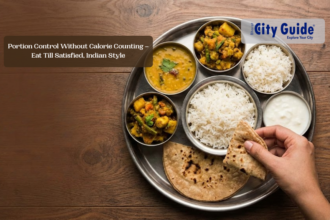
👉 Your traditional thali—dal, roti, sabzi, curd—is already one of the most balanced meal formats in the world.
When portioned right and eaten consistently, it meets modern nutrition science, fits Indian digestion, respects budgets, and aligns perfectly with ICMR (Indian Council of Medical Research) guidelines—even in 2026.
You don’t need to abandon your food culture.
You just need to understand balance.
The Familiar Plate Puzzle: Why “Enough Food” Still Feels Heavy
Picture this.
You’re prepping for a content shoot in Rajkot. Lunch is served. Family tradition kicks in, and your plate fills up with extra rice—because saying no feels rude.
An hour later:
- Sleepiness hits
- Focus drops
- Energy crashes
It wasn’t the rice.
It was the imbalance.
A balanced diet isn’t about eating less food—it’s about eating the right mix so your body gets energy without overload.
What Does “Balanced Diet” Actually Mean? (Indian Context)
A balanced diet provides:
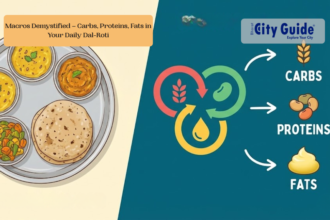
- Energy (carbohydrates)
- Repair and strength (proteins)
- Hormonal support and satiety (fats)
- Immunity and metabolism (vitamins & minerals)
- Gut health (fiber and fermented foods)
For Indians, balance must:
- Support spice-rich cooking
- Handle higher carb tolerance (when quality is right)
- Fit vegetarian and mixed diets
- Be affordable and local
That’s where the Indian thali shines.
ICMR’s “My Plate for the Day” – Built for Indian Bodies
The ICMR continues to recommend a visual plate model that suits Indian lifestyles and digestion patterns.
ICMR Balanced Plate Breakdown
- 🥗 Half the plate (≈400g):
Vegetables + fruits (raw + cooked) - 🌾 One-quarter (≈200g):
Cereals (roti, rice, millets) - 🫘 One-quarter (≈100g):
Pulses, legumes, dairy, nuts, seeds - 🥛 Daily inclusion:
Curd or buttermilk
This pattern fits 2,000–2,500 calories/day, which covers most active Indian adults.
Why This Plate Works So Well for Indians
1. High Fiber for Carb Control
Vegetables and whole grains slow glucose absorption, preventing sugar spikes.
2. Plant Protein Synergy
Dal + grains form complete amino acid profiles.
3. Fermented Foods for Gut Health
Curd and chaas improve digestion and immunity—studies show 30% better gut diversity than ultra-processed diets.
4. Spice Integration
Indian spices enhance nutrient absorption and reduce inflammation.
This isn’t coincidence.
It’s evolution + tradition + science.
The Diabetes & Lifestyle Disease Context (2026 Reality)
India continues to face rising rates of:
- Type 2 diabetes
- Heart disease
- Obesity
The core issue isn’t “Indian food.”
It’s:
- Excess refined carbs
- Low protein intake
- Reduced vegetable diversity
- Ultra-processed snacks
Balanced traditional plates consistently show better metabolic outcomes than Western-style convenience meals (as supported by EAT-Lancet comparisons).
Everyday Wins: How to Balance Your Thali Without Math
The Visual Rule (No Weighing Needed)
Look at your plate:
- Half vegetables? ✔️
- One protein anchor? ✔️
- Moderate carbs? ✔️
- Some healthy fat? ✔️
If yes—you’re balanced.
Variety Beats Perfection
Rotate foods weekly:
- Moong, chana, rajma
- Palak, lauki, bhindi, carrot
- Rice, roti, millets
Traps Indians Commonly Fall Into
❌ Myth: “Rice is bad, only roti is healthy”
Truth: Both are fine—quality and quantity matter more.
❌ Myth: “Dal covers all protein needs”
Truth: Rotate pulses and add dairy, nuts, or seeds.
❌ Myth: “Healthy food is expensive”
Truth: Seasonal vegetables and local grains are cheaper than packaged foods.
Realistic Indian Meal Examples (Balanced & Budget-Friendly)
Breakfast
- Poha + peanuts + curd
(Carbs + protein + probiotics)
Lunch
- 2 rotis
- Palak dal
- Carrot-beet salad
- Chaas
Snack
- Apple
- Handful of almonds
Dinner
- Millet khichdi
- Bottle gourd sabzi
Approx cost: ₹40–₹60/day using local mandi produce.
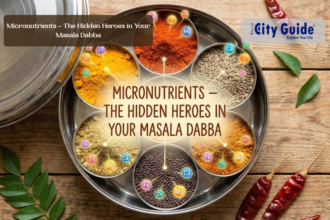
How Indian Spices Support Balance
- Turmeric: Anti-inflammatory, supports metabolism
- Jeera: Improves digestion
- Dhaniya: Aids detox
- Mustard seeds: Healthy fats + antioxidants
Your masala box quietly supports nutritional balance.
Why Indians Thrive on This Plate More Than Western Plates
Western plates often:
- Overload animal protein
- Underdeliver fiber
- Ignore fermentation
- Rely on ultra-processed foods
Indian plates:
- Are fiber-rich
- Support gut bacteria
- Balance carbs naturally
- Use functional spices
This makes them more sustainable long-term.
One-Change Wins That Make a Big Difference
- Use millets instead of white rice 3x/week
- Add curd daily for B12 + gut health
- Start meals with sabzi or salad
- Reduce portion of refined grains—not eliminate
Small tweaks > drastic changes.
Balanced Diet for Different Indian Lifestyles
Busy Professionals
- Focus on lunch balance to avoid afternoon crashes
Wellness Coaches & Creators
- Protein + vegetables improve focus and stamina
Older Adults
- Emphasize calcium, B12, and fiber
Women
- Iron-rich greens + vitamin C daily
Long-Term Impact of Eating a Balanced Thali
Consistent balance:
- Reduces heart disease risk (India’s #1 killer)
- Stabilizes blood sugar
- Supports healthy weight
- Improves gut health
- Enhances energy and mood
No extremes.
No imported foods.
Just rhythm and respect for tradition.
Conclusion: Your Thali Is Not Outdated—It’s Timeless
A balanced Indian thali is not “basic.”
It’s brilliant.
Backed by ICMR science.
Validated by modern research.
Proven by generations.
You don’t need to chase trends.
You need to tweak portions, prioritize variety, and trust your food culture.
Your plate already knows the way.
Frequently Asked Questions (FAQ)
Q1. Is a traditional Indian diet balanced by default?
It can be—when portion sizes and variety are right.
Q2. How many rotis should I eat per meal?
Usually 1–2, depending on activity level and vegetable intake.
Q3. Are millets better than rice?
They add variety and fiber, but balance matters more than replacement.
Q4. Can a balanced diet prevent diabetes?
It significantly lowers risk by stabilizing blood sugar.
Q5. Is curd necessary daily?
Yes, for gut health, calcium, and B12—unless medically restricted.
Today’s Food Habit Tip
👉 Use the half-plate vegetable rule at lunch and dinner.
Reflection Question
💭 On a scale of 1–10, how balanced was your main meal today?