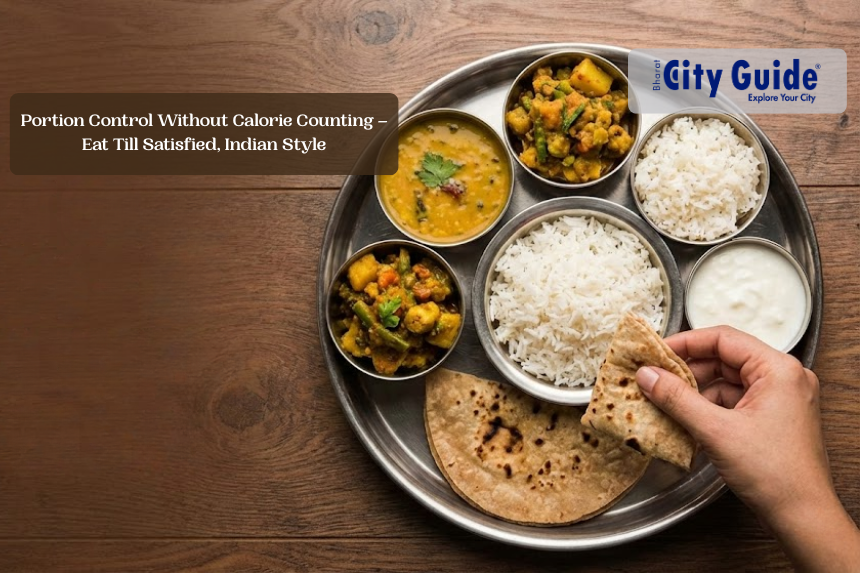
Ever finished a big thali feeling overstuffed, only to feel hungry, sleepy, or bloated an hour later?
- Why Portion Control Matters More Than Food Choice (Indian Reality)
- The Post-Meal Slump: A Familiar Indian Scene
- What Portion Control Actually Means (Not Diet Culture)
- The Science Behind Hand-Based Portions (ICMR Friendly)
- The Indian Hand Portion Method (Simple & Universal)
- Why This Works Especially Well for Indians
- Common Indian Portion Mistakes (And Why They Happen)
- How Portion Control Helps Without Weight Obsession
- Indian Meal Examples Using Hand Portions
- Portion Control at Social Events & Restaurants
- Mindful Pauses: The Secret Weapon
- Kitchen Swaps That Support Portions
- Portion Control & Diabetes Prevention (India Context)
- Long-Term Benefits Beyond Weight
- Conclusion: Portion Control Is Freedom, Not Restriction
- Frequently Asked Questions (FAQ)
- Today’s Food Habit Tip
- Reflection Question
You didn’t eat “wrong food.”
You ate too much of the right food—and not in the right proportions.
In Indian homes, portion control often gets confused with dieting, restriction, or “eating less.” But real portion control isn’t about shrinking joy—it’s about matching food quantity to your body’s needs, so digestion, energy, and focus stay steady.
And the best part?
👉 You don’t need calorie-counting apps.
👉 You don’t need weighing scales.
👉 You already carry the perfect measuring tool—your hands.
Why Portion Control Matters More Than Food Choice (Indian Reality)
Indian food is nutrient-dense, flavorful, and balanced by design. But modern lifestyles changed how much we eat, not just what we eat.
Today’s common pattern:
- Large rice or roti portions
- Smaller protein servings
- Vegetables treated as side decoration
- Eating fast, distracted, and socially pressured
This leads to:
- Energy crashes
- Blood sugar spikes
- Digestive discomfort
- Slow, silent weight gain
Portion control solves these without changing your cuisine.
The Post-Meal Slump: A Familiar Indian Scene
Picture this.
You’re a Rajkot-based content creator, filming wellness reels all morning. Lunch is a family gathering—biryani is served generously (with love).
You eat:
- Two heaped servings
- Minimal raita
- No vegetables
An hour later:
- Heavy eyes
- Sluggish editing
- Zero creative flow
This wasn’t about calories alone.
👉 It was portion size clashing with digestion capacity.
Indian digestion thrives on moderation, spices, and balance—not overload.
What Portion Control Actually Means (Not Diet Culture)
Portion control is:
- Eating until satisfied, not stuffed
- Giving your body enough—but not excess
- Respecting digestion speed
- Balancing carbs, proteins, fats, and fiber
It is not:
- Skipping meals
- Eating tiny amounts
- Feeling deprived
- Ignoring hunger
The goal is steady energy, not empty stomachs.
The Science Behind Hand-Based Portions (ICMR Friendly)
ICMR dietary guidelines focus on visual and practical cues, not calorie math.
Research shows:
- People who rely on visual portions eat 15–25% fewer excess calories
- Hand-based sizing naturally adjusts for body size
- This method aligns closely with ~2,000 calories/day for average adults
Your hands grow with your body—making them more accurate than generic numbers.
The Indian Hand Portion Method (Simple & Universal)
Here’s the method that works at home, weddings, dhabas, and office lunches.
1. Carbohydrates – One Cupped Hand
(Rice, poha, khichdi, upma)
- One cupped hand ≈ 1 cup cooked carbs
- Enough energy without overload
2. Protein – One Palm
(Dal, paneer, curd, eggs, legumes)
- Palm-sized portion ≈ 20–25g protein
- Supports satiety and muscle repair
3. Vegetables – Two Fists
(Sabzi, salad, greens)
- High fiber, low calories
- Improves digestion and fullness
4. Fats – One Thumb
(Oil, ghee, nuts, seeds)
- Thumb-sized ≈ 1 tsp fat
- Supports hormones and vitamin absorption
👉 This automatically balances your plate—no tracking needed.
Why This Works Especially Well for Indians
- Indian meals are mixed dishes (dal + rice + sabzi)
- Calorie counting fails with homemade food
- Social eating is common
- Portions vary wildly across households
Hands remove guesswork.
They also respect:
- Body size
- Gender differences
- Activity levels
Common Indian Portion Mistakes (And Why They Happen)
❌ “Family serving = my portion”
Family-style serving often adds 300–500 extra calories without you noticing.
❌ “Vegetables don’t count”
They absolutely do—and they help you eat less of carbs naturally.
❌ “Smaller plates trick the mind”
Short-term hack. Long-term habits matter more.
Mindful hand portions beat plate tricks every time.
How Portion Control Helps Without Weight Obsession
This approach:
- Reduces overeating without hunger
- Stabilizes blood sugar
- Improves digestion
- Prevents guilt cycles
Weight adjusts as a side effect, not the goal.
That’s why it’s sustainable.
Indian Meal Examples Using Hand Portions
Breakfast
- Fist-sized poha
- Palm paneer bhurji
- Thumb peanuts
Lunch
- 2 palms roti
- Fist dal
- Two fists bhindi
Snack
- Thumb nuts
- One fruit
Dinner
- Cupped khichdi
- Fist greens
Works at home. Works outside. No drama.
Portion Control at Social Events & Restaurants
Weddings & Parties
- Start with vegetables or salad
- Take one serving, pause, reassess
- Skip second helpings unless still hungry
Dhabas & Restaurants
- Share rice
- Ask for extra sabzi
- Eat slowly—spices enhance satiety hormones
Studies show spiced meals increase fullness signals compared to bland food.
Mindful Pauses: The Secret Weapon
One powerful habit:
👉 Pause midway through your meal.
Sip water or chaas.
Ask yourself:
- Am I satisfied?
- Or just continuing because food is there?
This single pause reduces overeating more than any rule.
Kitchen Swaps That Support Portions
- Use smaller katoris for rice
- Serve sabzi first
- Keep dal bowl visible, not rice heap
- Plate food instead of eating from containers
Environment shapes portions silently.
Portion Control & Diabetes Prevention (India Context)
India’s diabetes epidemic is driven by:
- Large refined carb portions
- Frequent snacking
- Low protein and fiber
Hand portions:
- Reduce carb overload
- Improve insulin sensitivity
- Lower post-meal sugar spikes
No carb elimination required.
Long-Term Benefits Beyond Weight
Consistent portion control:
- Improves focus and productivity
- Prevents afternoon crashes
- Supports digestive health
- Makes eating joyful, not stressful
- Fits travel, festivals, and real life
This is why it works for life, not just phases.
Conclusion: Portion Control Is Freedom, Not Restriction
You don’t need to eat less food.
You need to eat the right amount—for your body.
Indian food already has:
- Balance
- Flavor
- Satiety
- Nutrition
Portion control simply restores harmony.
Master your handfuls.
Ditch guilt.
Let your plate work with you, not against you.
Frequently Asked Questions (FAQ)
Q1. Is portion control better than calorie counting?
Yes. It’s more sustainable, realistic, and culturally compatible.
Q2. Will I lose weight with hand portions?
Most people naturally regulate weight without trying.
Q3. What if I’m very active?
Add another cupped carb or palm protein—hands scale with needs.
Q4. Does this work for Indian mixed dishes?
Yes. Estimate the dominant component using hand cues.
Q5. Can portion control prevent overeating at night?
Balanced portions earlier reduce late-night hunger.
Today’s Food Habit Tip
👉 Use your hand as a portion guide for every meal today.
Reflection Question
💭 Which hand portion felt most natural—or most surprising—today?