He Hides Under the Blanket—and Sleep Slips Away Again
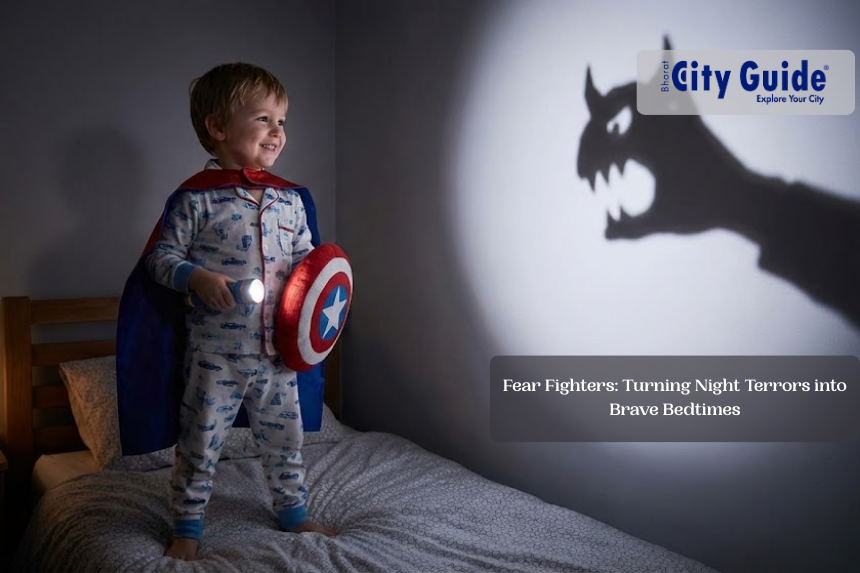
It’s late evening in Pune. Thunder rumbles outside, rain lashes the windows, and your 8-year-old disappears under the blanket, eyes wide with fear.
- He Hides Under the Blanket—and Sleep Slips Away Again
- Why Fear Peaks Between Ages 6–10
- Fear Is the Brain Practicing Survival
- Why Addressing Fear Matters Today
- Reframing Bedtime Fear: Your Child Needs a Guide, Not a Judge
- Practical, Gentle Tools to Turn Fear into Confidence
- Common Mistakes That Make Fear Stronger
- The Long-Term Impact: From Night Fears to Life Courage
- A Gentle Reminder for Parents
- Try This Tonight
“Monsters are coming,” he whispers.
The lights stay on. Midnight creeps closer. You’re exhausted, tomorrow is a workday, and a familiar thought surfaces:
Why is this still happening at this age?
Here’s the reassurance you need right now:
Your child isn’t weak, dramatic, or regressing. He’s developing.
Night fears are not a failure of parenting.
They’re a sign of a growing mind.
Why Fear Peaks Between Ages 6–10
Between 6 and 10 years, children experience a powerful mental shift.
Their imagination expands rapidly.
They can now:
- Visualize danger
- Anticipate future events
- Imagine worst-case scenarios
But they still lack the emotional tools to fully separate imagined danger from real threat.
So fear shows up at night.
Darkness removes visual reassurance, and the brain fills the gaps.
This isn’t weakness—it’s brain training for real-world problem-solving.
Fear Is the Brain Practicing Survival
Fear exists for a reason.
It’s the brain’s alarm system.
In early childhood, fear protects against real dangers.
In middle childhood, fear becomes more symbolic—monsters, storms, shadows, burglars.
Handled gently, fear teaches:
- Risk assessment
- Emotional regulation
- Courage through repetition
Dismissed or mocked, fear becomes anxiety.
Why Addressing Fear Matters Today
Modern children face:
- Academic pressure
- News exposure
- Adult stress bleeding into homes
Unprocessed fear doesn’t vanish.
It often resurfaces later as:
- Exam anxiety
- Social fear
- Avoidance behaviors
Supporting fear early builds emotional bravery.
Reframing Bedtime Fear: Your Child Needs a Guide, Not a Judge
When your child says, “I’m scared,” he’s not asking you to remove fear forever.
He’s asking:
“Will you help me feel safe while I learn to face this?”
That’s your role.
Practical, Gentle Tools to Turn Fear into Confidence
These strategies work because they respect a child’s imagination while strengthening safety.
1. The “Monster Spray” Technique
Fill a spray bottle with water.
Add a ritual:
- Say magic words
- Spray corners of the room
- Let your child participate
Why this works:
- Gives fear a boundary
- Creates a sense of control
- Uses imagination to fight imagination
You’re not reinforcing belief in monsters—you’re reinforcing belief in coping.
2. Create a Predictable Bedtime Routine
Fear thrives in uncertainty.
Consistency calms the nervous system.
A simple routine:
- Story
- Hug
- Dim light
- Same goodbye phrase
Repetition tells the brain:
“Nothing unexpected will happen now.”
3. Talk About Fear in Daylight
Fear loses power when discussed calmly.
During the day, ask:
“What scared you last night?”
Then add:
“We faced it together.”
This builds narrative memory—I was scared, and I survived.
4. Teach the Difference Between Imagination and Reality (Gently)
Avoid logic lectures at night.
But during calm moments, say:
“Our brain sometimes makes scary pictures when it’s dark. That’s imagination—not danger.”
Knowledge builds mastery.
Common Mistakes That Make Fear Stronger
❌ “Big Boys Don’t Cry”
This teaches:
- Emotions are shameful
- Fear must be hidden
Hidden fear grows louder.
❌ Forcing Independence Too Fast
“Sleep alone now” without emotional readiness can backfire.
Confidence grows through supported steps.
❌ Mocking or Dismissing Fear
What feels silly to adults feels real to children.
Validation reduces fear intensity.
The Long-Term Impact: From Night Fears to Life Courage
Children who learn to face fear with support grow into adults who:
- Attempt difficult exams
- Speak up in interviews
- Take healthy risks
Bravery isn’t the absence of fear.
It’s learning how to move through it.
A Gentle Reminder for Parents
You are not spoiling your child by comforting them.
You are teaching them:
“I can feel scared—and still be safe.”
That lesson lasts a lifetime.
Try This Tonight
Sit beside your child.
Acknowledge the fear.
Offer one small tool.
Stay calm.
Reflection Question
What bedtime ritual makes your child feel safest?