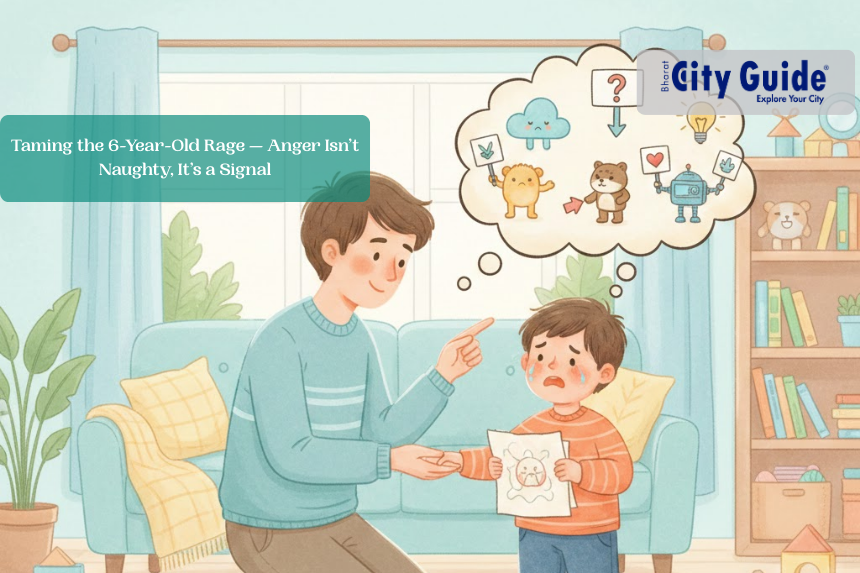
He Slams His School Bag—and Your Heart Drops
It’s evening in Chennai. Your 7-year-old storms into the house, throws his school bag across the room, and shouts, “I hate you!” after losing a cricket match.
- He Slams His School Bag—and Your Heart Drops
- Ages 6–10: The Emotional Pressure Cooker Years
- Why Anger Deserves Attention, Not Suppression
- Reframing Rage: What Your Child Is Really Saying
- Practical Tools to Help Kids Regulate Anger
- Common Mistakes That Shut Kids Down
- Long-Term Impact: Anger as Strength
- Try This Today
Your chest tightens.
You wonder:
- Where did this anger come from?
- Am I raising an aggressive child?
- Should I punish this behavior?
Take a breath.
Your child isn’t naughty.
He’s overwhelmed.
Ages 6–10: The Emotional Pressure Cooker Years
Between ages 6 and 10, children experience a major emotional shift:
- Academic expectations rise
- Peer comparison begins
- Winning, losing, fairness, and rejection become personal
Their emotional brain surges ahead—but their regulation skills lag behind.
So anger shows up.
Not as bad behavior.
But as unprocessed energy.
Anger is not the problem. Not knowing what to do with it is.
Why Anger Deserves Attention, Not Suppression
When anger is shamed or ignored, children learn:
- “Strong emotions are unsafe.”
- “I must hide how I feel.”
Suppressed anger doesn’t disappear.
It leaks out later as:
- Teen rebellion
- Explosive outbursts
- Anxiety or withdrawal
Handled gently, anger becomes:
- Self-awareness
- Assertiveness
- Emotional strength
Reframing Rage: What Your Child Is Really Saying
When your child yells “I hate you,” he’s often saying:
- “I feel powerless.”
- “I feel embarrassed.”
- “I don’t know how to process this loss.”
Your calm response teaches him what to do with big feelings.
Practical Tools to Help Kids Regulate Anger
1. Pause and Breathe Together
In the heat of anger, logic won’t land.
First, regulate the body.
Say:
“Let’s breathe together. In 1-2-3… out like a lion.”
Why it works:
- Slows the nervous system
- Releases physical tension
- Models calm under stress
2. Use an “Anger Ball”
Give anger a physical outlet.
Hand your child a soft toy or stress ball.
Say:
“Squeeze this and tell me why you’re angry.”
This helps children:
- Release energy safely
- Link feelings to words
- Feel understood, not judged
3. Talk After the Storm
Once calm returns, gently reflect:
“You were really upset. Was it because the team didn’t pass the ball?”
This builds:
- Emotional vocabulary
- Problem-solving skills
- Self-reflection
Common Mistakes That Shut Kids Down
❌ “Be a Good Boy!”
This teaches children:
“Good kids don’t feel angry.”
Instead say:
“It’s okay to feel angry. It’s not okay to hurt.”
❌ Punishing Emotions
Discipline should guide behavior—not shame feelings.
Long-Term Impact: Anger as Strength
Emotionally guided children grow into adults who:
- Handle group conflicts
- Communicate needs clearly
- Manage stress without exploding
One calm moment today prevents many storms tomorrow.
Try This Today
When anger appears, ask:
“What is my child feeling underneath this?”
Name it together.
Reflection Question
What helps your child calm down fastest?