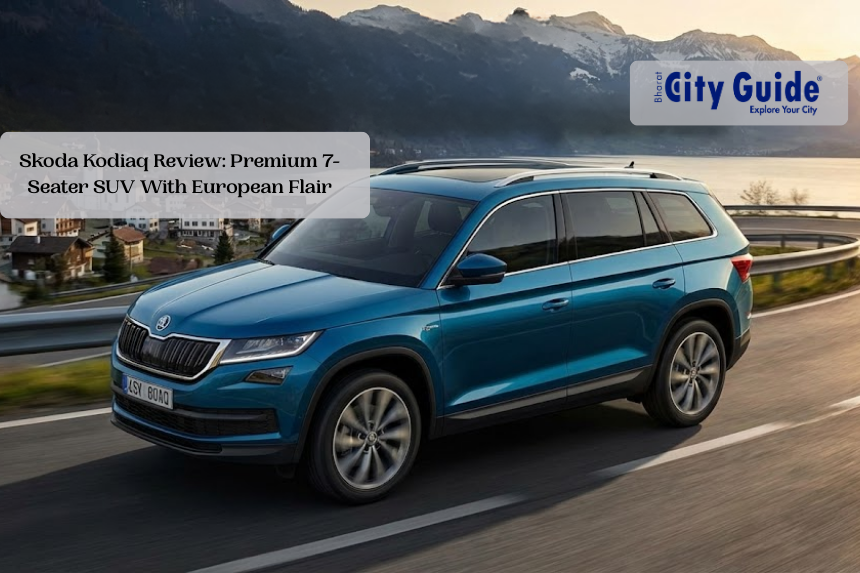
The Skoda Kodiaq has made a strong comeback in India, returning after its 2022 exit with a bigger body, premium features, and the same European build quality that made it a cult favourite. Launched in April 2025, the new Kodiaq is positioned as a premium 7-seater SUV that targets big Indian families who want a luxury experience without paying the inflated prices of German SUVs.
- Launch Context: Why the Kodiaq Returns Now
- Design & Road Presence: Premium Looks, Strong Stance
- Engine & Performance: Smooth Power, Refined Drive
- Ride Comfort & Handling: Euro-Firm, Highway King
- Interior, Features & Tech: Luxury Cabin With Practical Space
- Safety Features: Strong and Reliable
- Mileage, Range & Running Cost
- Price & Variants (Ex-Showroom)
- Who Should Buy the Skoda Kodiaq 2026?
- Who Should Avoid the Kodiaq?
- Pros & Cons
- Things Dealers Won’t Tell You
- Ownership Cost Snapshot (15,000 km/year)
- Best Alternative
- Future Relevance (2025–2030)
- Final Verdict
- Quick Buyer Tip
- Reader Question
In a market where premium SUVs are booming, the Kodiaq’s return is significant. It combines European sophistication, space, and practicality, making it a serious option for metro families who spend weekends driving to Lonavala, Goa, or Mahabaleshwar. However, it’s priced at ₹45 lakh and above, making it a luxury buy. The real question is: Does the Kodiaq justify its premium tag?
Launch Context: Why the Kodiaq Returns Now
Skoda’s decision to relaunch the Kodiaq in April 2025 comes at a time when Indian premium SUV demand is skyrocketing. The original Kodiaq had left the market in 2022 due to stricter emission norms and the need for upgrades. The new model returns on the MQB Evo platform, measuring 4.75 meters long, and is aimed at urban elites who want a premium 7-seater SUV without the Tiguan’s price jump.
The Kodiaq is currently offered only with a 2.0 TSI petrol engine (201hp). While this avoids diesel-related BS6 complications, it also means the SUV is thirsty and may not appeal to diesel loyalists. Still, the car’s premium feel and European refinement make it attractive for buyers who value comfort and performance over mileage.
Design & Road Presence: Premium Looks, Strong Stance
The Kodiaq’s design is bold yet elegant. Its squared jawline, matrix LED headlights, and 19-inch wheels give it an Audi-like presence on roads like Bandra-Worli Sea Link. The vertical taillights and chrome accents make it look premium without being overly flashy.
At 155mm ground clearance, it is not as high as some rivals, meaning it may scrape on steep ramps or speed breakers more easily. However, the Kodiaq feels planted and stable, reflecting its European tuning.
Engine & Performance: Smooth Power, Refined Drive
The Kodiaq comes with a 2.0L turbo petrol engine producing 201 hp and 320 Nm torque. This engine is smooth, refined, and powerful enough for highway overtakes.
The 7-speed DSG gearbox is one of the best in the segment, offering buttery shifts and strong acceleration. The Kodiaq can sprint from 0–100 kmph in around 8.5 seconds, even when fully loaded. Torque kicks in from 2,000 rpm, which means city driving is effortless with minimal turbo lag.
Overall, the Kodiaq feels more refined than many rivals, offering a calm, premium driving experience.
Ride Comfort & Handling: Euro-Firm, Highway King
The Kodiaq is tuned with a firm European suspension setup. On Mumbai’s pothole-filled roads, it can feel busy and stiff over deep dips, especially around 20cm potholes. This is the price of a car that handles well on highways.
However, once you hit the highway, the Kodiaq truly shines. It cruises smoothly at 140 kmph, and the adaptive dampers (available in top trims) soften the ride without losing handling precision. Body roll is minimal, and the car feels composed even when fully loaded.
The 7-seater configuration remains stable, but the third row is best suited for kids. Adults may find it cramped on long journeys.
Interior, Features & Tech: Luxury Cabin With Practical Space
Inside, the Kodiaq feels premium and plush. The cabin features:
- Premium leather upholstery
- 13-inch touchscreen infotainment system
- Digital cockpit
- Ventilated seats
- 360-degree camera
- Three-zone climate control
- Large panoramic sunroof
- Wireless Android Auto
The boot is spacious, offering 910 litres with the third row folded. The cabin feels luxurious, with high-quality materials and a practical layout suitable for families.
The Kodiaq is built for daily comfort, making it ideal for long drives and highway cruising.
Safety Features: Strong and Reliable
Safety is a major strength for Skoda. The Kodiaq comes with:
- 9 airbags
- ESC (Electronic Stability Control)
- Tyre pressure monitoring
- Multi-collision brake
- Exit warning system
- Blind spot detection (top trims)
- Park assist (top trims)
However, there is no full ADAS suite yet, which is a drawback in this price range. Still, the car’s strong chassis and solid build quality give it an edge in crash safety.
Mileage, Range & Running Cost
Fuel efficiency is a concern with the petrol-only Kodiaq.
Real-world Mileage
- City: 8 kmpl
- Highway: 12 kmpl
- Overall: 9–11 kmpl
At ₹100 per litre petrol, a 100 km drive costs around ₹900–₹1,100.
Annual service costs are around ₹15,000+, and insurance can be as high as ₹1.5 lakh per year. Resale value is decent, around 65% after 3 years, provided maintenance is consistent.
Price & Variants (Ex-Showroom)
| Variant | Price (Ex-showroom) | Key Features |
| Classic | ₹45.65L | 7AT, 7 seats |
| Signature | ₹51.65L | Panoramic sunroof |
| L&K (Top) | ₹57L | Ventilated seats |
Who Should Buy the Skoda Kodiaq 2026?
- Large families in metro cities needing a premium 7-seater SUV
- Highway cruisers who value refinement over mileage
- Skoda loyalists who prefer European build quality
Who Should Avoid the Kodiaq?
- Budget buyers under ₹40 lakh
- Diesel loyalists or mileage-conscious buyers
- Drivers who deal with rough roads daily (firm ride)
Pros & Cons
Pros
- Spacious 7-seater cabin
- Premium interior and build quality
- Punchy 2.0L turbo petrol engine
- Sharp handling and stable ride
Cons
- Firm ride on bad roads
- No diesel option
- No ADAS features
- Higher running costs
Things Dealers Won’t Tell You
- The DSG gearbox prefers smooth driving; aggressive driving can heat it up.
- The third row is not ideal for adults on long journeys.
Ownership Cost Snapshot (15,000 km/year)
- Buy: ₹50L
- Annual fuel + service: ₹1.5L
- Resale after 5 years: ₹35L
Best Alternative
Toyota Innova Hycross – offers better space, comfort, and reliability at a similar price.
Future Relevance (2025–2030)
The petrol Kodiaq is expected to remain relevant until around 2028. By 2029, Skoda may introduce a plug-in hybrid version as India shifts toward electrification. For now, the Kodiaq remains relevant for premium family fleets and long-distance travellers.
Final Verdict
If you want a luxury 7-seater SUV with European build quality, the Kodiaq is worth buying. The Signature AT offers the best blend of features and value. But if you need diesel efficiency, softer ride, or ADAS, you may want to wait or choose an alternative.
Quick Buyer Tip
Always test the Kodiaq on highways and rough roads before buying. Also check the third-row usability for your family.
Reader Question
Does the Kodiaq’s firm ride bother you on Indian roads? Share your drive stories in the comments!